Ethnic ChinaLit Excerpt of the Week (Apr 2): China’s Amnesia Is a State-sponsored Sport

Excerpt of the Week 1 Comment »

Our tolerance to this type of amnesia [with Chinese characteristics] originates from the state’s carrot-and-stick strategies that are designed to achieve the nation’s memory loss.

Thirty years ago, the instruments used against people who resisted state-sponsored amnesia were ropes and chains. Now, as China’s economy grows and the state has an enormous amount of money at its disposal, it skillfully uses financial incentives to entice people into giving up their memories and to compromise with the state. In this country money now has an almighty power that can seal people’s lips and dry writers’ pens. It can also force literary imagination to fly in the opposite direction of truth and conscience.

It doesn’t matter whether you are a writer, a historian or social scientist. You will be awarded power, fame and money as long as you are willing to see what is allowed to be seen, and look away from what is not allowed to be looked at; as long as you are willing to sing the praises of what needs to be praised and ignore what needs to be blanked out. In other words, our amnesia is a state-sponsored sport. Read the rest of this entry »

Ethnic ChinaLit Quote of the Day (Mar 31): Ethnic Literature Nightmare

Quote of the Week 2 Comments »

As the most influential genre in contemporary literature, the state of the novel in ethnic minority literature and Han literature is proof that separate ethnic identities have not resulted in disparities of literary imagination. In terms of their reflection of mundane life, nostalgia for their homelands, and pursuit of transcendence, all the novels [in "2011 Selected Ethnic Minority Writing"] convey that the living conditions of ethnic minorities are those of an ordinary Chinese; the former’s thoughts, hopes and longings are those of an ordinary Chinese. 

(Comments on the content of 2011 Selected Ethnic Minority Writing (《中国少数民族文学 2011 年度选》) by Liu Daxian, member of the editing team of Studies of Ethnic Literature Magazine (《民族文学研究》编辑部的副研究员, 刘大先) )

China’s Bilingual Writers: Narrative with a Difference

Tibetan (藏族), Uyghur (维吾尔族) 5 Comments »

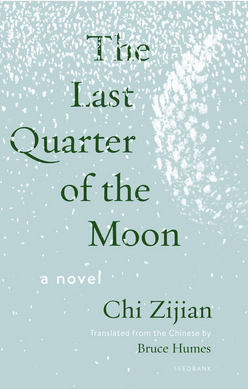
It began back in 2008 with Penguin investing heavily—$100,000 is the rumored price—to purchase Jiang Rong’s tale set in Inner Mongolia, Wolf Totem. This year two newly translated novels have joined China’s “borderland fiction” category: Fan Wen’s Une terre de lait et de miel, located in the gateway to Tibet straddling Yunnan and Sichuan, and Chi Zijian’s Last Quarter of the Moon, which features the reindeer-herding Evenki whose lives revolve around the Argun River that demarcates the Sino-Russian border.

Penned in Chinese, these novels are the creations of Han authors who have consciously chosen to set their tales among non-Han peoples who have historically resided at the fringes of the Middle Kingdom. Ran Ping’s Legend of Mongolia (蒙古往事), a fictionalized biography of Genghis Khan that was short-listed for the Mao Dun Literary Prize in 2008, also falls into this category, but it has not been translated into a European language.

Of course, there are popular novelists of various ethnicities who choose to write about their people using Chinese. Part-Tibetan Alai, author of King Gesar (格萨尔王) and Red Poppies (尘埃落定), comes to mind, for instance

But what about writers who not only speak two languages native to China, but write in both? How does their ability to move seamlessly between two tongues impact their choice of themes and their “narrative voice”? Two such authors have recently come to my attention, one who writes in Tibetan and Chinese, and another who has mastered Uyghur and Chinese.

Fortunately for you—if you read French—7 of Pema Tseden’s short stories originally in Tibetan (3) and Chinese (4) have just been released in one volume from Editions Philippe Picquier, Neige. Filmmaker and writer Tseden (པད་མ་ཚེ་བརྟན།) is a pioneer in the use of Tibetan, the first mainland director to ever shoot a film entirely in his native tongue (Old Dog). Read the rest of this entry »

2013 China Publication Fund: Approved Projects Put Accent on China’s Far West & Things Tibetan

Awards, Hezhen, Tibetan (藏族), Uyghur (维吾尔族) 1 Comment »

Some 340 projects proposed by 251 China publishers are set to benefit from some pretty hefty funding—a total of US$57m—via the 2013 China Publication Fund (2013 国家出版基金), according to a March 26, 2013 Xinhua report (340 项目). For the first time since such funding came on stream in 2007, all 12 of China’s western-most provinces have approved projects on the list, including Tibet with 9 worth over US$2.7m. For a complete list of all 340 projects in Chinese, click here.

I list some approved projects concerning the culture, history and literature of non-Han peoples:

Title of  Publication to Be Funded (my translation)

Original Chinese Publication or Project Title

Publisher

Description & Comments

Buddhist Art

Art History of the Dunhuang Grottoes

《敦煌石窟美术史》

高等教育出版社 (Higher Education Press)

2 volumes on Buddhist grottoes dating to the period of the Sixteen Kingdoms (304-439)

Complete Yungang Grotto Carvings

《云刚石窟雕刻全集》

青岛出版集团 (Qingdao Publishing Group)

Yungang Grottoes are ancient Chinese Buddhist temple grottoes near the city of Datong in the province of Shanxi. Due out in 2015 in bilingual (Chinese and English) version.


《唐卡鉴藏》

Thanka (Buddhist religious painting)

Jiangnan 

《传世盛秀》百折昆曲中英出版工程

浙江文艺音像出版社 (Zhejiang Literature & Arts Audio-Video Publishing House)

Bilingual (Chinese and English) book on Kunqu Opera, which was very popular during the 16th to 18th centuries. The style originated in the Wu cultural area that encompasses modern-day Suzhou, Zhejiang Province and Shanghai.

Mongolian

Encyclopedia of Mongolian Customs

蒙古族民俗百科全书——物质卷

内蒙古教育出版社 (Inner Mongolia Education Publishing)

Tibetan 

Collection of Orally Transmitted Tibetan Folk Culture (Vol 2)

《藏族民间口传文化汇典(第二辑)》

甘肃文化出版社 (Gansu Culture Press)

Eight Tibetan Opera Comics

《八大藏戏连环画》

Tibetan Religion, History and Culture

西藏宗教历史文化》

西藏人民出版社 (Tibet People’s Press)

《影印藏医药珍本古籍》

Photocopies of ancient Tibetan writing on traditional medicine

Potala Palace

《布达拉宫》

Select Excerpts of Music about King Gesar

《格萨尔王音乐精选》

《〈60位感动西藏人物〉纪录片》

60 documentaries about Tibetan personalities

Tibetan Folk Customs

《西藏民俗》

Tibet’s Intangible Cultural Heritage (Vol 1)

《西藏非物质文化遗产(第一辑)》

Geography and History of China’s Northeast

《东北历史地理》

人民出版社 (People’s Press)


西藏非物质文化遗产传承人口述史

海豚出版社有限责任公司

Storytelling  & Songs

Research on the History of Transmission of Folk Tales of Peoples of Southwest China

西南少数民族口述传播史研究

重庆大学出版社 (Chongqing University Press)

Imakan: Sung Epic of the Hezhen People

《赫哲绝唱伊玛堪集成》

人民出版社 (People’s Press)

Ancient Songs of the Yi

彝族古歌(上、下册)

贵州民族出版社 (Guizhou Nationalities Publishing)

Theatre

History of Ethnic Minority Theatre

中国少数民族戏剧史

中国民族摄影艺术出版社

Xinjiang

Complete Works of Elshir Nawa’I (Vol 5-29)

《纳瓦依作品全集(5-29卷)》

民族出版社 (Nationalities Publishing House)

Renowned Uyghur poet born in Hirat (modern-day Afghanistan) who lived during 1441-1501. Known in Chinese as纳瓦尼扎木丁·艾利希尔·纳瓦依

Xinjiang Ethnic Minorities

中国新疆少数民族

新疆人民出版社 (Xinjiang People’s Press)

Yunnan


《声动云南——云南二十五个世居少数民族音乐传承与保护项目》

第一阶段

云南音像出版社 (Yunnan Audio-Video Publishing)


Ethnic ChinaLit Excerpt of the Week (Mar 28): Dirge for the Mongolian Grasslands

Excerpt of the Week, Mongolian (蒙古族) No Comments »

” 在我采访的牧民当中,尽管他们的生活过得很艰苦—11年时还住在不通水不通电的房子里,偷着放牧,不然连镇上的羊肉都买不起—却没有人抱怨过政 府所宣称的要保护草原生态的初衷。他们所不满的,是政策宣传和执行的不统一。既然当初领导一家家做工作说要恢复生态,为何允许无休止的风机建设和矿产开 发?那些挖矿的人开采完后,并不把矿填回去,工业用水也是任意排放,在草原修建的简易的土路,成了大卡车横冲直撞的理由。当年5月份发生的莫日根被卡车碾 压致死事件,是内蒙草原上牧民和开矿者冲突极端化的鲜明注脚。”

(Under the guise of protecting the environment, traditional sheep herders outside Baotou, Inner Mongolia, are no longer permitted to allow their livestock to graze freely. Meanwhile, increasingly intensive rare earth mining and wind farming tear apart the landscape. Excerpted from article in the Chinese online edition of the New York Times by Columbia U grad student Bao Beibei (草原哀歌), based on interviews conducted on site.)

Turkish Authors in Chinese: Low Profile due in Part to Search Engine Hiccups

Turkic Connections No Comments »

As noted here recently, 2013 is Turkish Culture Year in China and so I’ve been trawling the web for Chinese titles of contemporary Turkish

writers. One problem: the use of several letters in Turkish that don’t normally appear in English. Even famous Turkish authors like Elif Şafak can be hard to find on the Chinese web, no doubt due to that sexy “Ş” at the beginning of her family name. Try it out on China’s world-class search engine Baidu.com if you don’t believe me. The first page of results tells me a lot about someone called Elif afak . . .

In an effort to get a decent list of contemporary Turkish authors available in Chinese—and establish that there’s more to the Turkish literary scene than Orhan Pamuk—I’ve contacted several Turkish literary agencies. Kalem Agency in Istanbul has replied and given me a list, many of which are just now being translated for publication by Zhejiang University Press (浙江大学出版社) and Shanghai Literature & Arts Publishing House (上海文艺出版社), so as soon as I get the specific book titles in Chinese, I’ll update my modest table below.

Turkish Fiction Available in Chinese

(Your additions welcome)

Turkish Author


Chinese title


Chinese Translator

Turkish/Other Languages

Comments

Murat Gülsoy

<伊斯坦布尔之仁慈七日>

夏勇敏


Istanbul’da Bir Merhamet Haftası/A Week of Kindness in Istanbul

Orhan Kemal

<父亲的家园>

夏勇敏

Baba Evi/My Father’s House


<杰米莱 >

尹婷婷


Cemile


<在富饶的土地上>

夏勇敏


Bereketli Topraklar Üzerinde/On Fertile Land


<流浪的岁月>

汤剑昆


Avare Yıllar/Idle Years

Tuna Kiremitçi (克瑞米提奇)

<同样的祈祷>

方凡,

谢国建

Dualar Kalıcıdır/Prayers Stay the Same

 Cover: see picture (above).

Ayşe Kulin

<开往伊斯坦布尔的最后列车>

梁永安

/Last Train for Istanbul

Zülfü Livaneli

伊斯坦布尔幸福


Mutluluk/Bliss

Translated fro m the English.

Orhan Pamuk (奥尔罕·帕慕克)

<别样的色彩>

宗笑飞,

林边水

Öteki Renkler /Other Colors


Translated from the English.

<我的名字叫红>

沈志兴

Benim Adım Kırmızı/My Name is Red

<天真的何感伤的小说家>

彭发胜


Saf ve Düşünceli Romancı/The Naïve and Sentimental Novelist


<伊斯坦布尔:一座城市的记忆>

何佩桦

İstanbul: Hatıralar ve Şehir/Istanbul: Memories and the City


<雪>

沈志兴, 张磊, 彭俊, 丁慧君


Kar/Snow


<纯真博物馆>

陈竹冰


Masumiyet Müzesi /Museum of Innocence


<新人生>

<寂静的房子>

蔡鹃如

沈志兴

 Yeni Hayat/The New Life


Sessiz Ev/Silent House


<黑书>

李佳姗


Kara Kitap /The Black Book


<白色城堡>

沈志兴


Beyaz Kale /The White Castle

Elif Şafak (艾丽芙•沙法克)

<伊斯坦布尔的私生子>

Bastard of Istanbul

Available in HK/Taiwan.

Ahmet Hamdi Tanpınar (阿赫迈特·哈姆迪·唐帕纳尔)

<安宁>

夏勇敏

Huzur/A Mind at Peace


“Turkish Culture Year in China”: Bringing Orhan Pamuk to . . . Tibetan Speakers?

Tibetan (藏族), Turkic Connections No Comments »

Tibet specialist Françoise Robin has kindly alerted me to the fact that the February 2013 Tibetan edition of National Literature Magazine (民族文学杂志,藏文版) features two pieces by Turkey’s Nobel Laureate, Orhan Pamuk. If your Tibetan is up to par, read about them here: མི་རིགས་ཀྱི་རྩོམ་རིག.

One is apparently a speech by Pamuk that translates as “Eastern and Western cultures and the Literary Imagination” in English, and the other is a Tibetan version of The Ship on the Golden Horn, the penultimate chapter of his Istanbul: Memories of the City (Istanbul: Hatıralar ve Şehir).

Is this part of China’s government-endorsed “Turkish Culture Year” campaign? Can’t say for sure,

A dose of hüzün for Tibetan readers

though I wouldn’t be surprised. National Literature Magazine (民族文学) is a state-run publication now available in Han Chinese, Uyghur, Kazakh, Korean, Mongolian and Tibetan.

But it would be interesting to know how Tibetan renders that peculiarly Turkish concept—hüzün or (something akin to) melancholy—that runs throughout Pamuk’s work.

African Literature in China: Still Stuck on “Things Fall Apart”?

African Connections No Comments »

China’s 21-century investment in Africa is massive, multifaceted and a cause of anxiety for leaders in Washington, London, Paris and among the continent’s other former colonial masters, as well as New Delhi. But China is not just busy building airports and railways in Africa, or inking deals to monopolize the exploitation and export of valuable minerals and fossil fuels for decades to come.

The exercise of “soft power” is very much on the agenda too. China-funded Confucius Institutes—promoting the teaching of Chinese language and culture—are popping up throughout Africa, including Egypt and Morocco in the Arab world, and several sub-Saharan countries, including Benin, Botswana, Cameroon, Kenya, Nigeria and Rwanda.

In return, one might well ask: what is China “importing,” culture-wise, from Africa?  If the translation and publication of African writing in Chinese is

anything to go by, the continent is hardly a blip on China’s cultural radar. . .

To read the rest of this article, click here.

London Book Fair Event April 16: “Translation Flows in Asia”

Events No Comments »

Date/Time: Tuesday 16 Apr 2013, 16:45 – 17:45

Venue: Literary Translation Centre, EC2 (London Book Fair)

Topic: In recent years there has been growing interest in literature coming out of Asia, but much of the focus has been on writing originally in English. This panel will look at what’s happening with literature written in languages other than English. Speakers will explore the translation flows in Asia – into Asia, between various Asian countries, and out of Asia – discussing trends and key issues, as well as the role of the English language in the process. On the panel: Kate Griffin (British Centre for Literary Translation), Michael Emmerich (literary translator from Japanese), Anna Holmwood (see photo at left, literary agent, translator from Chinese and Swedish, including Ai Mi’s Under the Hawthorn Tree), Alvin Pang (Singaporean poet), and Deborah Smith (literary translator from Korean).

“Turkish Culture Year in China”: But Where Are the Books?

Events, Turkic Connections No Comments »

Thursday March 21st saw the official launch of “Turkish Culture Year in China” (土耳其文化年) in Beijing.  The road show—destined for 12 cities—includes dance and music performances, fashion shows and a “Turkish Cuisine Week,” but I haven’t found a detailed list or schedule yet. Beijing, Shanghai, Yichang (Hubei), Shenzhen and Hong Kong are confirmed road stops, though.  It comes on the heels of “Chinese Culture Year in Turkey” which ended in February and helped attract 120,000 Chinese visitors to Turkey last year.

Readers who want to get a taste of Turkish literary works in Chinese will find them thin on the ground, however; see my initial list here.  In the PRC, the only widely translated Turkish author is Nobel Laureate Orhan Pamuk. Several of his best-known novels including My Name is Red, Museum of Innocence and Snow are available in Chinese (奥尔罕·帕慕克).  <伊斯坦布尔的幸福> (Mutluluk, or Bliss in English) by Zülfü Livaneli, the writer, musician, singer, journalist and member of parliament, is one of just a handful of novels—Pamuk’s aside, obviously—that have been genuinely well received in China where Turkey still has a rather low profile.


Turkish Literary Works Rendered in Foreign Languages via TEDA Project

(Mid-2012 Statistics)


Target Language

Titles Translated

German

175

Bulgarian

119

Arabic

83

English

66

Farsi

56

Albanian

56

French

39

Greek

34

Bosnian

34

Spanish

17

Chinese

10


Other translations into the Chinese tend to be dependent on Turkey’s TEDA, a program under the Ministry of Culture & Tourism that subsidizes translations and publication into many languages. Tellingly, the web site appears in Turkish, German, French and English.

Incredibly, as of end August 2012 when spokesperson Ümit Yaşar Gözüm was cited in an article about the Beijing Book Fair (Debut in Beijing), just ten subsidized works of fiction had been put into Chinese and were on display at the fair. Four of them were by Orhan Kemal (1914-70), who wrote frequently about the working class and did time in jail due to his alleged pro-communist sympathies: <父亲的家园> (Baba Evi; or My Father’s House in English); <杰米莱 > (Cemile); <在富饶的土地上> (Bereketli Topraklar Üzerinde; On Fertile Land); and <流浪的岁月> (Avare Yıllar; Idle Years). These titles in Chinese can all be seen here.

According to Gözüm there are only a handful of qualified Turkish-to-Chinese literary translators, and they can each only handle two titles a year.  They include Shen Zhixing (沈志兴), a professor of Turkish in Henan’s Loyang who has translated several of Pamuk’s novels; and three reporters for the state-run China Radio International, Xia Yongmin (夏勇敏), Yin Tingting (尹婷婷) and Tang Jiankun (汤剑昆).

Xia Yongmin, who studied in Turkey in the late 1980s, is a particularly high-profile translator, both because of his senior position at CRI and his output, including two works by Orhan Kemal (<父亲的家园> and <在富饶的土地上>), and one by a contemporary Turkish author, Murat Gülsoy, <伊斯坦布尔之仁慈七日> (A Week of Kindness in Istanbul).  Xia created and hosts “Xinjiang Today,” and as such plays a key role in China’s propaganda campaign aimed at justifying its Uyghur-related policies to speakers of Turkic languages throughout Central Asia and Turkey.

WP Theme & Icons by N.Design Studio
Entries RSS Comments RSS Log in